We offer a wide collection of free, high-quality printable coloring pages for kids and adults. From cute animals to intricate mandalas, our designs bring creativity and relaxation to everyone. Download, print, and start coloring today!

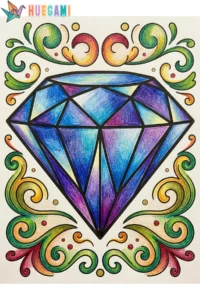
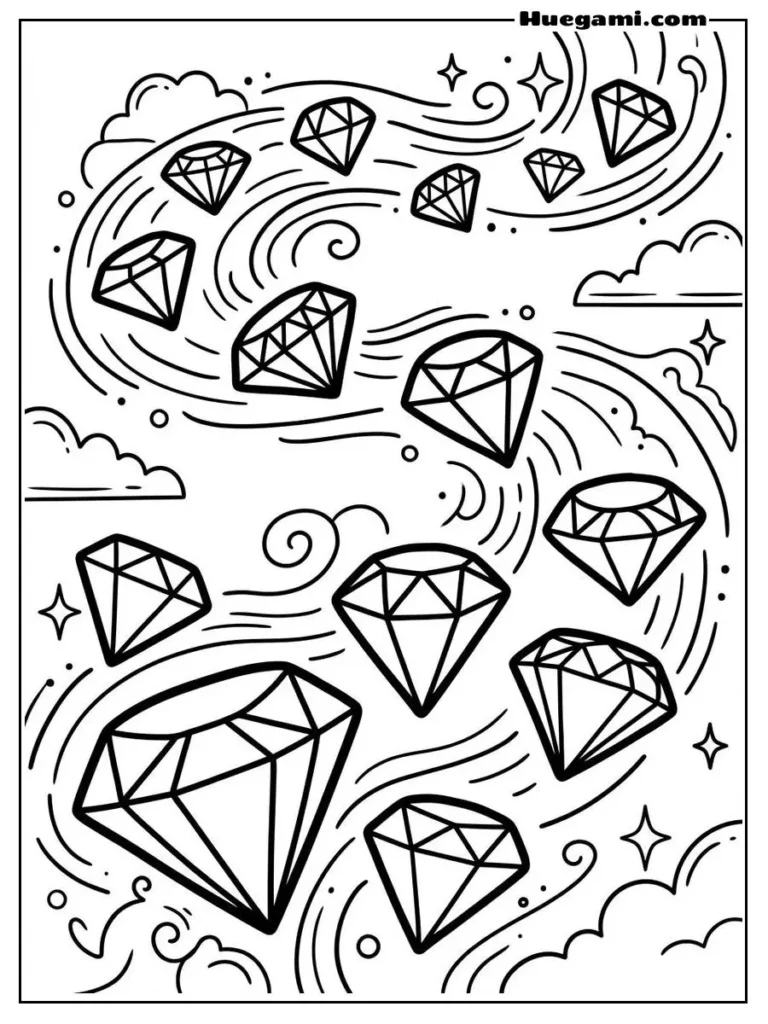
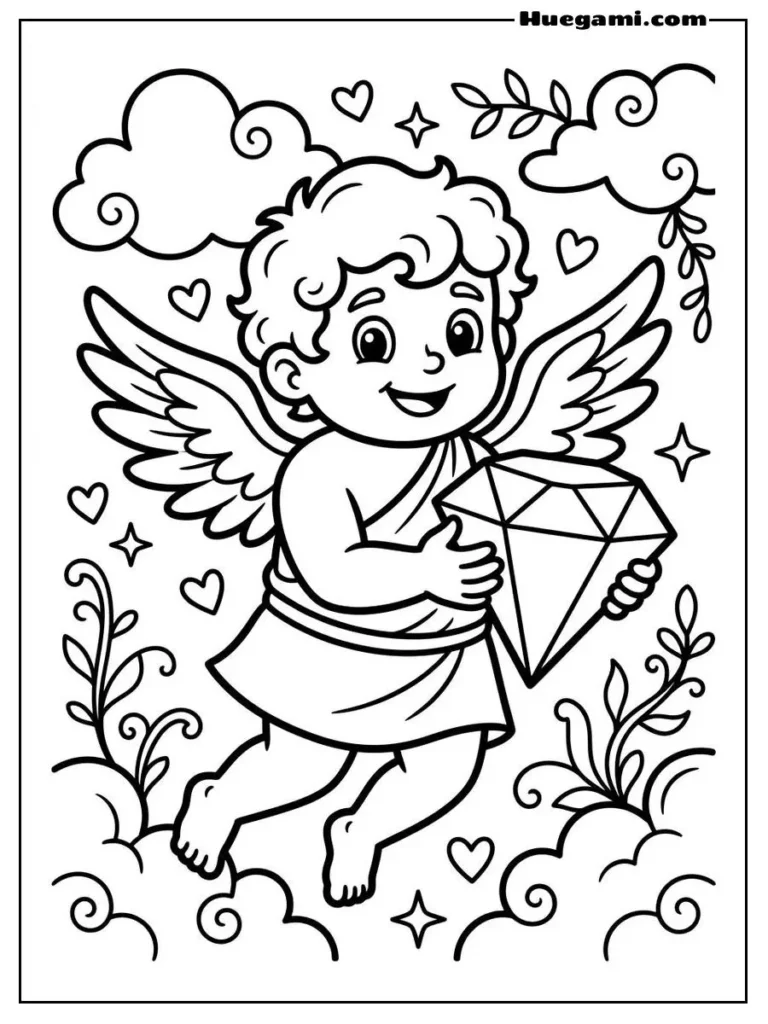
Diamonds have sparkled their way into stories, songs, and jewelry boxes for centuries, and now they can sparkle on your kitchen table too. Our diamonds coloring sheets at Huegami are free and printable, with designs ranging from one big, easy gem for little hands to patterned jewels for older kids who like a challenge. Whether you are hunting for diamonds coloring pages for a rainy afternoon or a printable diamonds coloring book to keep in a folder, you are in the right spot. Along the way, you will learn where diamonds come from and how a plain-looking rock becomes a shining gem.
↓ Jump to the free printable pages
Amazing Facts About Diamonds
A diamond is made of carbon, the same basic ingredient found in pencil lead and in all living things. What makes a diamond so different is how its carbon atoms are packed together. Deep inside the Earth, in places with enormous heat and pressure, carbon atoms lock into a tight, strong pattern. Over a very long time, often well over a billion years, that pattern grows into a crystal. Because of this strong structure, diamonds are among the hardest natural materials known, which is why they are used in some tools as well as in jewelry.
So how do diamonds travel from deep underground to the surface where people can find them? Long ago, powerful volcanic eruptions carried some diamonds upward inside a special kind of rock. Over time, that rock cooled and settled into narrow, pipe-like formations. Today, people search those areas, as well as old riverbeds where water has carried stones away, to find rough diamonds. A rough diamond does not look like the glittering gems in a shop window. Many look more like cloudy, glassy pebbles, and an untrained eye could walk right past one.
Many people think of diamonds as clear and colorless, but natural diamonds can come in other shades too. Some are pale yellow or brown, and a few rare ones show up in pink or blue. That is a wonderful reason to bring out every crayon in the box, because a diamond on your page does not have to be white or silver. When you download our free diamonds coloring sheets, you can make a ruby-red jewel one day and an ocean-blue one the next.
Diamonds also have a place in tradition and folklore. Diamond is traditionally the birthstone for April, so you might know someone with a diamond birthday month. Some say diamonds are a symbol of strength and lasting friendship, and according to old stories, they were once believed to protect the people who wore them. Whether or not you believe the legends, they make diamonds feel like treasure from a fairy tale.
The word “diamond” is also a shape name that shows up everywhere. A baseball field has a diamond-shaped infield, and a deck of playing cards has a red diamond suit. Kite makers often use the shape because it is easy to cut and fold. Once you start looking, you will spot diamonds in quilts, window patterns, and floor tiles. That makes our printable pages a fun way to practice noticing shapes in the world around you.
From Rough Stone to Sparkling Gem
A diamond does not sparkle the moment it comes out of the ground. It takes skilled people and patient steps to turn a rough stone into a gem. First, the stones are sorted by size, shape, and clarity. Then an expert studies each rough diamond closely and plans how to cut it. This planning step matters a great deal, because a mistake could waste a lot of the stone, and a diamond cannot be put back together once it has been cut.
Next comes the cutting. Since a diamond is so hard, the only thing that can cut and polish it well is another diamond. Workers use tools coated with tiny bits of diamond dust to shape the stone. Little by little, they grind flat, shiny surfaces called facets into the gem. Each facet is like a tiny mirror, and together they bounce light around inside the stone and back to your eyes. That bouncing is what gives a well-cut diamond its famous sparkle.
Not every diamond is dug from the ground, either. Today, some diamonds are also grown in laboratories, using machines that copy the heat and pressure found deep in the Earth. These are made of the same basic material, and they are then cut and polished in similar ways. This shows how people have become curious enough about diamonds to learn to make them.
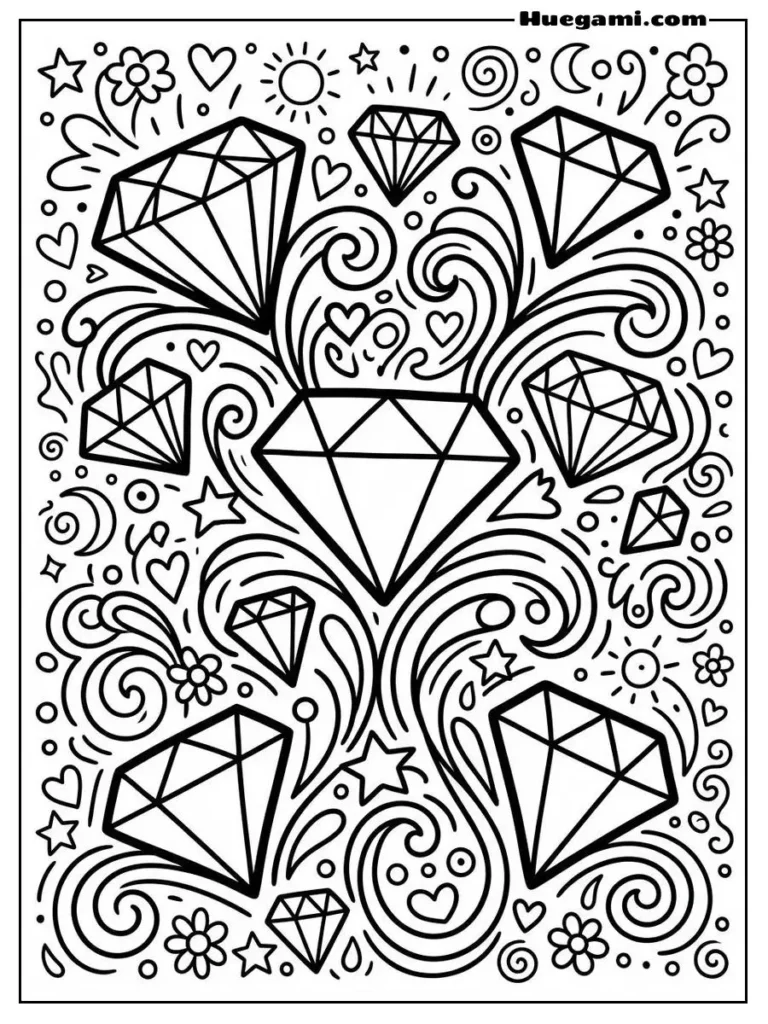
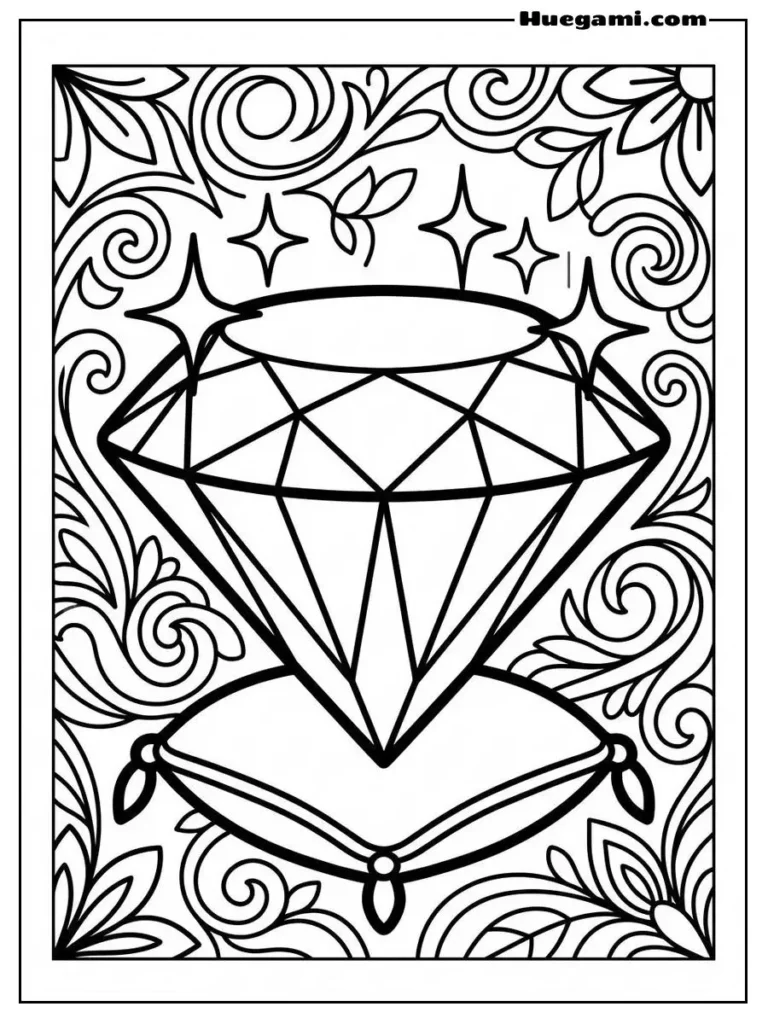
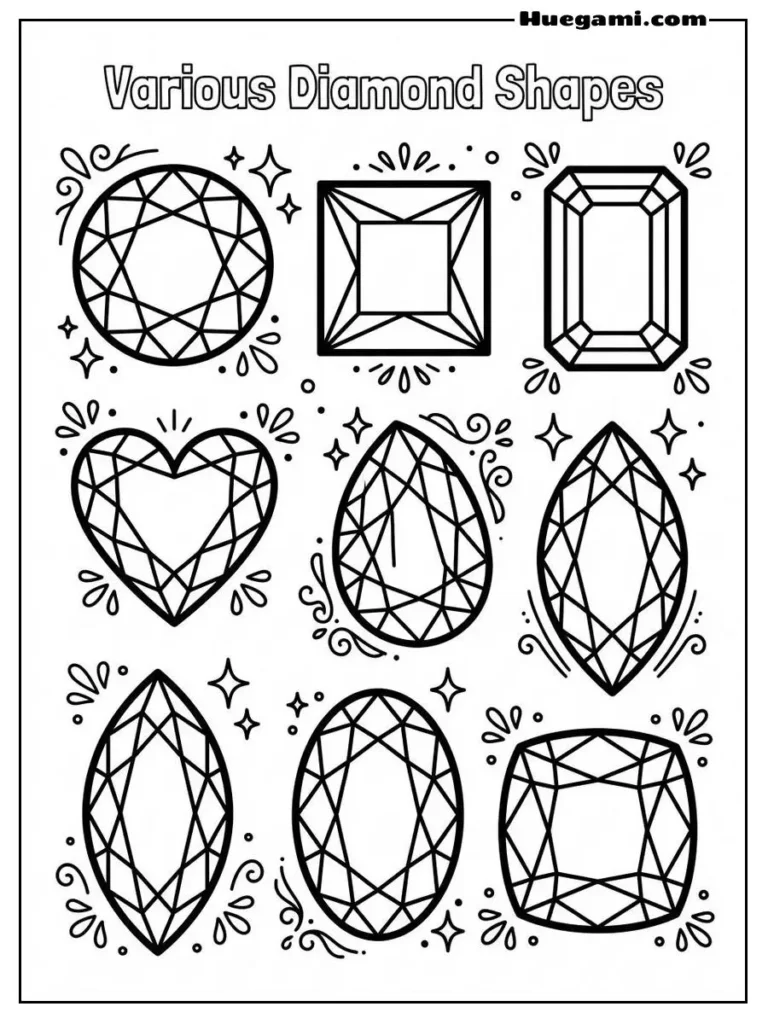
Look closely at a diamond outline on one of our pages, and you will see many small triangles and diamond shapes that mimic those facets. Coloring each little section in a different color is a playful way to imagine how a gem is built from many flat faces. You can follow the real pattern or invent your own rainbow jewel. Either way, you will have made something that sparkles.
What’s Inside These Coloring Sheets
Our collection includes a mix of sparkling designs, so there is something for a first-time crayon holder and for a kid who loves to fill in tiny details. Here is a peek at what you will find:
- Big, bold single diamonds with thick outlines that are easy for toddlers and preschoolers to color.
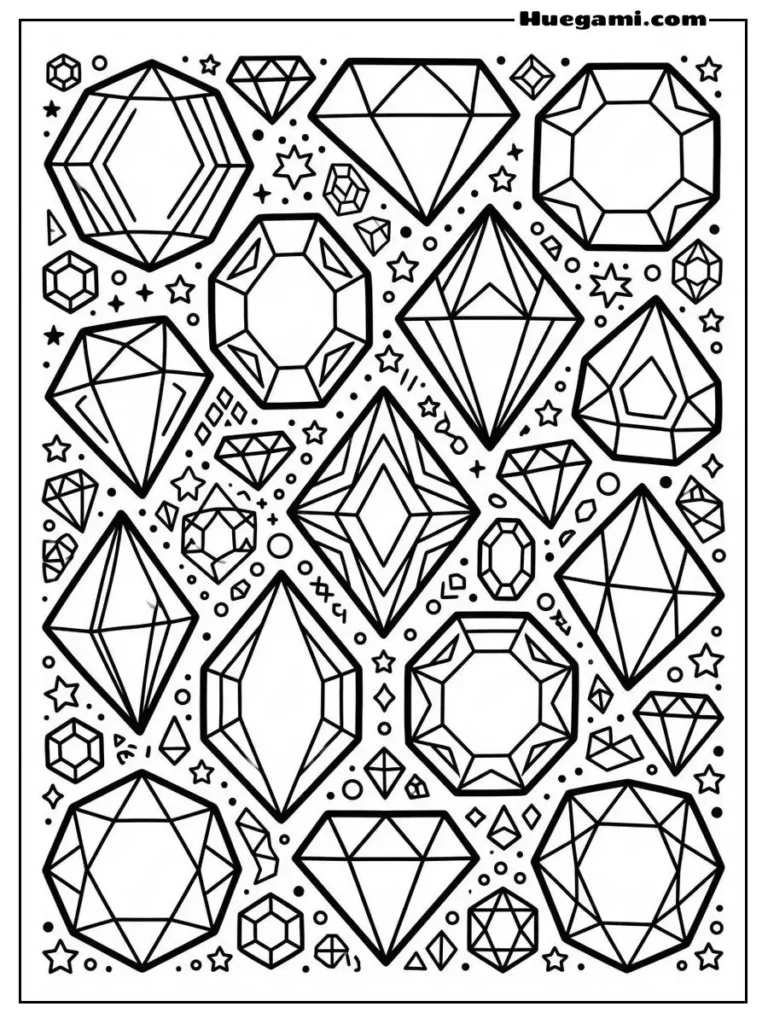
- Faceted gemstones with many small sections, so you can give each facet its own color.
- Repeating diamond patterns, like a quilt or a tile floor, for kids who enjoy rhythm and repetition.
- Treasure chests and jewel boxes overflowing with gems of different sizes.
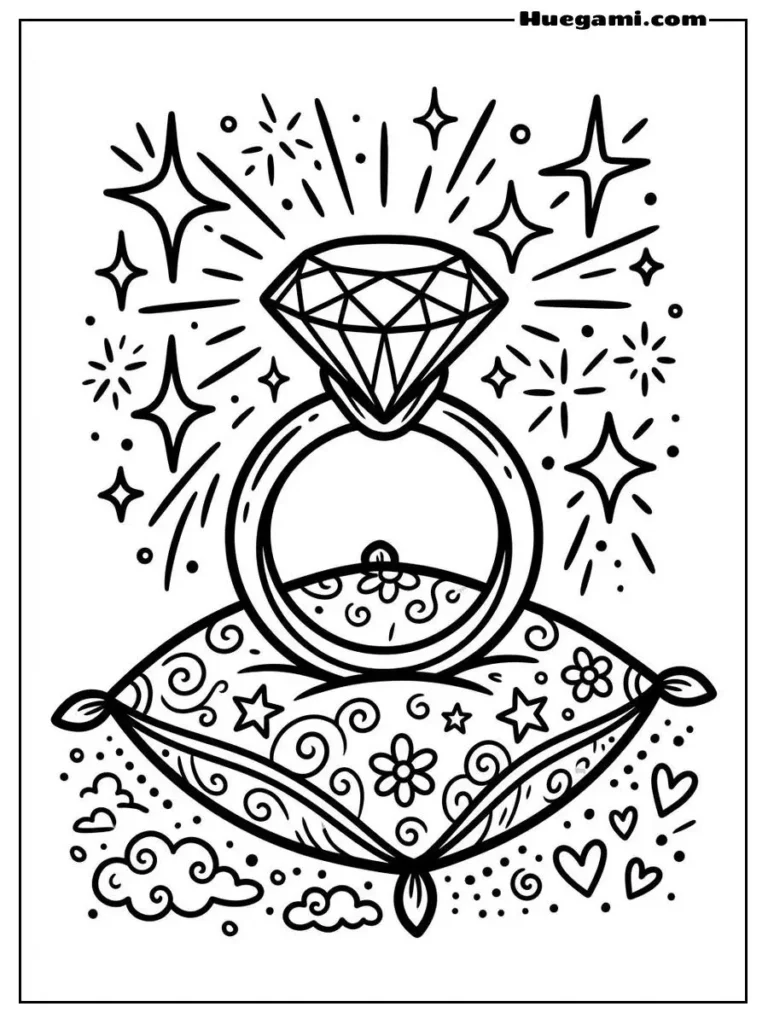
- Rings, crowns, and necklaces decorated with sparkling stones for pretend royalty.
- Sweet treat pages with diamond-shaped cookies and candy jewels, a nice match for fans of yummy coloring pages and printable food coloring sheets.
Pick one page or print a few, and see which style your family likes best. New favorites often turn up when you try a design you would not normally choose.
What Kids Can Learn From Diamonds
Coloring the many small facets on a gemstone page builds fine motor control, since little hands have to stay inside tiny spaces. It also gives kids a hands-on way to notice geometry. They can count the triangles in a jewel, spot the same diamond shape repeating in a pattern, and talk about why shapes fit together the way they do. A shape that seemed boring on a worksheet can suddenly feel exciting when it is part of a gem.
Diamonds also open the door to big science questions. Where do gems come from? Why are some stones clear while others are colorful? How can the same ingredient, carbon, make both pencil lead and a diamond? These questions work well at home, and they also make a fun short lesson in a classroom, where kids of every skill level can color the same theme at their own pace.
How to Use and Print Your Sheets
Getting your diamonds ready takes only a few minutes. Here are some simple tips:
- Download the page you like and print it on regular white paper, since the outlines are black and white and need no color ink.
- Give younger kids chunky crayons for big gems, and offer markers or colored pencils to older kids for tiny facets.
- Try silver, gold, or pale-colored crayons next to bold ones to make your jewels pop.
- Finished a gem? Tape it to a window so the colors glow in the daylight, or string several together like a sparkly banner.
Fun Ideas and Activities
Once the coloring is done, the diamond theme can keep going with games, snacks, and small science projects. Here are a few ideas that suit diamonds, from the kitchen to the backyard:
- Grow rock candy crystals: With a grown-up handling the hot water, dissolve sugar in a jar and hang a string inside. Over several days, watch sugar crystals form, like a sweet cousin of real gems.
- Have a diamond shape hunt around the house and yard, looking for diamond patterns on tiles, fences, kites, or fabric.
- Cut sandwiches or soft cookies into diamond shapes and have a gem-themed snack picnic.
- Make a pretend treasure hunt by hiding smooth pebbles or paper jewels, then sort them by size and color.
- Invent your own diamond-shaped playing card or tile game, using cut-out diamonds colored in different patterns.
Frequently Asked Questions
Do I need a color printer to use these pages?
Not at all. The pages are black-and-white outlines, so any regular printer will do. The color comes from your crayons, markers, or colored pencils.
What colors can real diamonds be?
Many diamonds are clear or nearly colorless, but natural diamonds can also be shades like yellow or brown. A few rare ones are pink or blue. On your coloring page, you can choose whichever color you like, real or imaginary.
Are laboratory-grown diamonds real diamonds?
Lab-grown diamonds are made from the same basic material as mined ones, but they are created by machines instead of deep inside the Earth. They are then cut and polished in similar ways. It is a neat example of people using science to copy nature.
Which pages are best for younger children?
Look for the big single diamonds with thick outlines and plenty of open space. These are easier for small hands to color. Save the faceted gems and pattern pages for when they are ready for more detail.
Can I print the same page more than once?
Yes! Printing a page twice is a fun way to try two color schemes side by side, such as one warm-toned and one cool-toned. Many kids like comparing their different versions afterward.
Conclusion
Diamonds are more than shiny stones. They are crystals of carbon grown deep underground over a very long time, carried upward by ancient volcanoes, and then shaped by skilled hands into gems with dozens of tiny mirror-like faces. Now you know why they sparkle, what a facet is, and why some people say they symbolize strength. That is quite a lot to learn from one little gem!
Our diamonds coloring sheets turn all of that into something you can hold in your hands. You can color a bold single jewel, fill a treasure chest, or decorate a crown fit for a storybook queen. Pair them with a sugar-crystal experiment or a diamond-shape scavenger hunt, and your whole afternoon becomes a gem-themed adventure.
Ready to start? Download and print your favorite pages today, grab your brightest crayons, and make some sparkle of your own. When you are done, explore more Seasonal & Lifestyle Coloring Pages on Huegami for your next free printable.