We offer a wide collection of free, high-quality printable coloring pages for kids and adults. From cute animals to intricate mandalas, our designs bring creativity and relaxation to everyone. Download, print, and start coloring today!


Every child has a doctor story: the cold stethoscope on their chest, the sticker at the end of a check-up, or the teddy bear who needed a bandage. That is why doctor coloring sheets get kids talking as well as coloring. At Huegami, we offer free printable doctor coloring pages that turn a familiar (and sometimes nervous) experience into a friendly one. Whether you are a parent planning a rainy afternoon, a teacher building a community helpers coloring sheets unit, or a kid who dreams of wearing a white coat, this guide covers who doctors are, what they carry, and how to get the most from your printable jobs coloring pages.
↓ Jump to the free printable pages
Meet the Doctor: Who They Are and What They Do
A doctor is a trained health professional who helps people stay well and feel better when they are sick or hurt. Some doctors see families for regular check-ups, where they measure height, listen to hearts and lungs, and ask questions about sleep, food, and playtime. Others focus on one special part of the body. There are doctors for the heart, the eyes, the skin, the bones, and the ears, nose, and throat. Doctors who care specifically for children are often called pediatricians, and many kids know them best.
The idea of healers is very old. People in ancient civilizations around the world studied plants, watched patients carefully, and passed their knowledge on. In ancient Greece, a physician named Hippocrates is often called the father of medicine, and some say his ideas about careful observation shaped how doctors think to this day. Over the centuries, medicine has grown to include hospitals, clinics, laboratories, and teams of people working together. Today, becoming a doctor takes many years of school and hands-on training, which is one reason people admire the job so much.
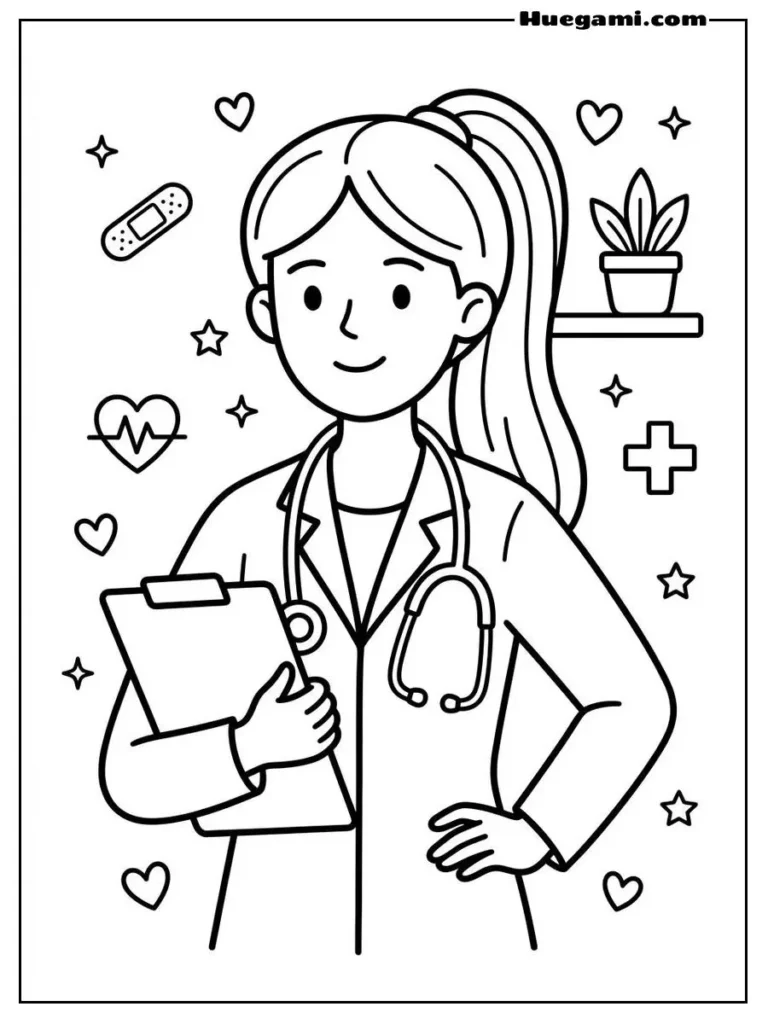
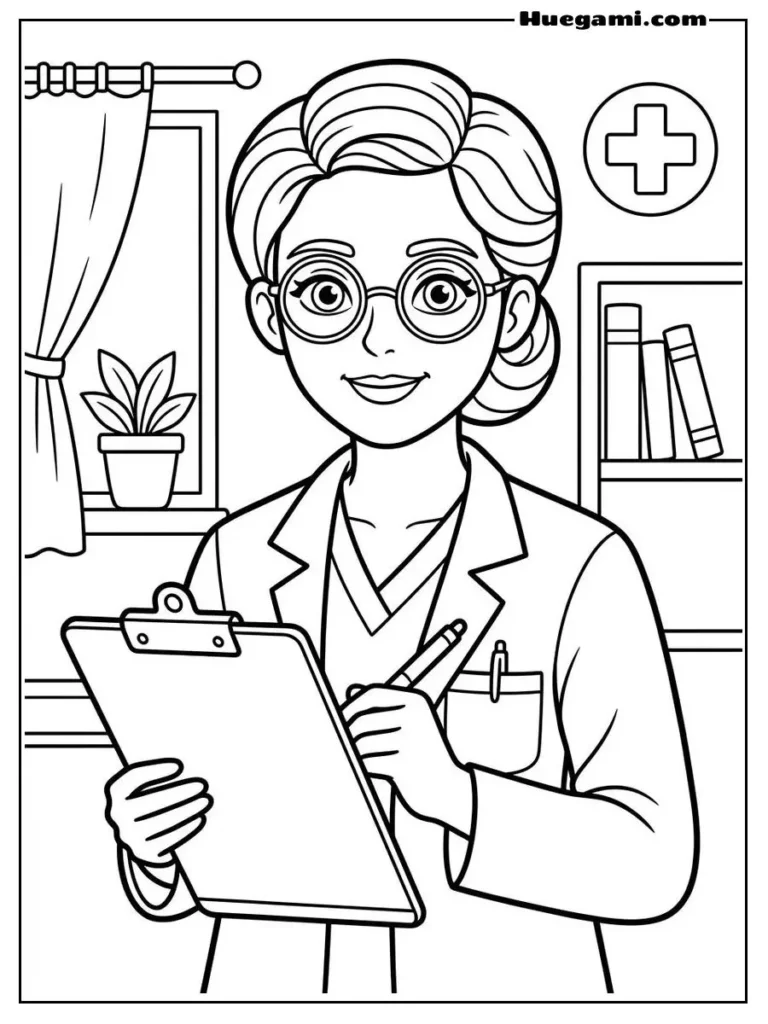
What makes doctor coloring pages such a good fit for young learners is how easy the job is to recognize. The white coat, the stethoscope draped around the neck, and the clipboard are clues kids spot right away. Kids often love learning that a doctor’s day is full of helping: answering worried questions, explaining what is happening in simple words, and working with nurses, technicians, and other helpers. That teamwork idea is a wonderful one to talk about while crayons are moving.
The white coat has its own story. Some say it became popular because white looks clean and serious, and many doctors still wear one, though plenty of others wear colorful scrubs or everyday clothes. If your child asks why a doctor is dressed a certain way, you can turn it into a fun conversation about how uniforms tell us what a person’s job is. It also gives kids a chance to decide for themselves what color the coat should be on their career coloring pages. Real doctors may be found in a busy hospital, a quiet neighborhood clinic, a school, or even a mobile health van that travels to communities. Each of those places makes a different scene to imagine and color.
Doctors also spend a good part of their day simply talking and listening. A good doctor asks questions, listens closely to the answers, and explains things gently, especially to children. Kids who understand this tend to feel braver at the next appointment. When they see a friendly doctor smiling on the page in front of them, the whole idea of a check-up feels a little less mysterious and a lot more welcoming.
Inside a Doctor’s Bag: The Tools of the Trade
Every doctor has a few trusty tools, and each one has a job. The most famous is the stethoscope. According to the widely told story, a French doctor named René Laennec invented it in 1816 after rolling up a sheet of paper into a tube to listen to a patient’s heart. It worked so well that he built a wooden version, and the idea kept improving over time. Modern stethoscopes have two earpieces and a flat disc on the end, and they help doctors hear heartbeats and breathing clearly. If you ever want a fun craft, you can make your own pretend version from a paper tube, just like that first one.
Another tool you might spot is the thermometer, which tells a doctor whether a body is running warmer than usual. Today many thermometers are quick and gentle, and they beep when they are finished. Then there is the otoscope, a small handheld light with a cone on the end that lets a doctor peek safely into ears. A close cousin lets a doctor look at the back of the throat, which is why so many kids hear the words “open wide and say ahh.” There is also the blood pressure cuff, a soft band that squeezes gently around the arm, and the little reflex hammer that makes a knee kick when it taps the right spot.
Doctors also keep bandages, gloves, and notepads close at hand. The clipboard or computer is not just paperwork, either. It holds the notes that help a doctor remember how each patient is growing and feeling from visit to visit. Some doctors carry a small flashlight in a pocket, and others keep a jar of stickers for brave patients. Those tiny details make wonderful things to spot and color on a page, and they give kids something to name and describe as they work.
Knowing the tools helps children feel curious instead of worried. When a child can say “that’s an otoscope, it looks in my ears,” the tool stops being scary and becomes something familiar. With your printable doctor coloring book pages in hand, you can point at each tool, ask what it does, and let your child decide which colors to use. A stethoscope might be silver, purple, or rainbow. Nobody is checking, and the point is to enjoy the story.
What’s Inside These Coloring Sheets
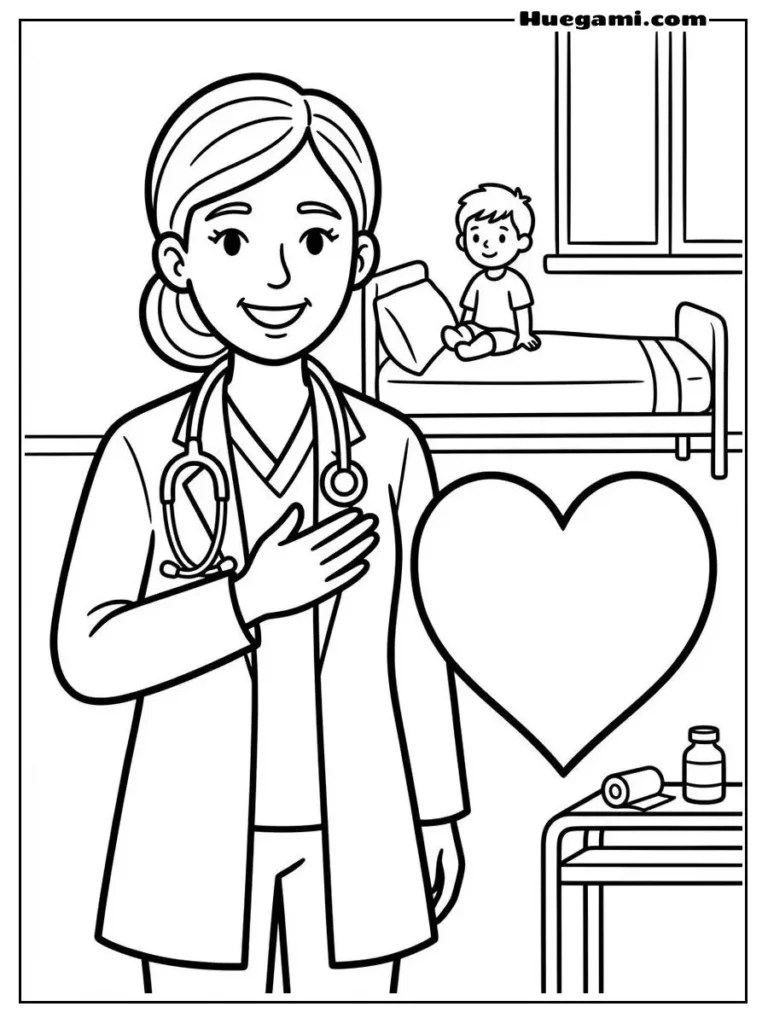
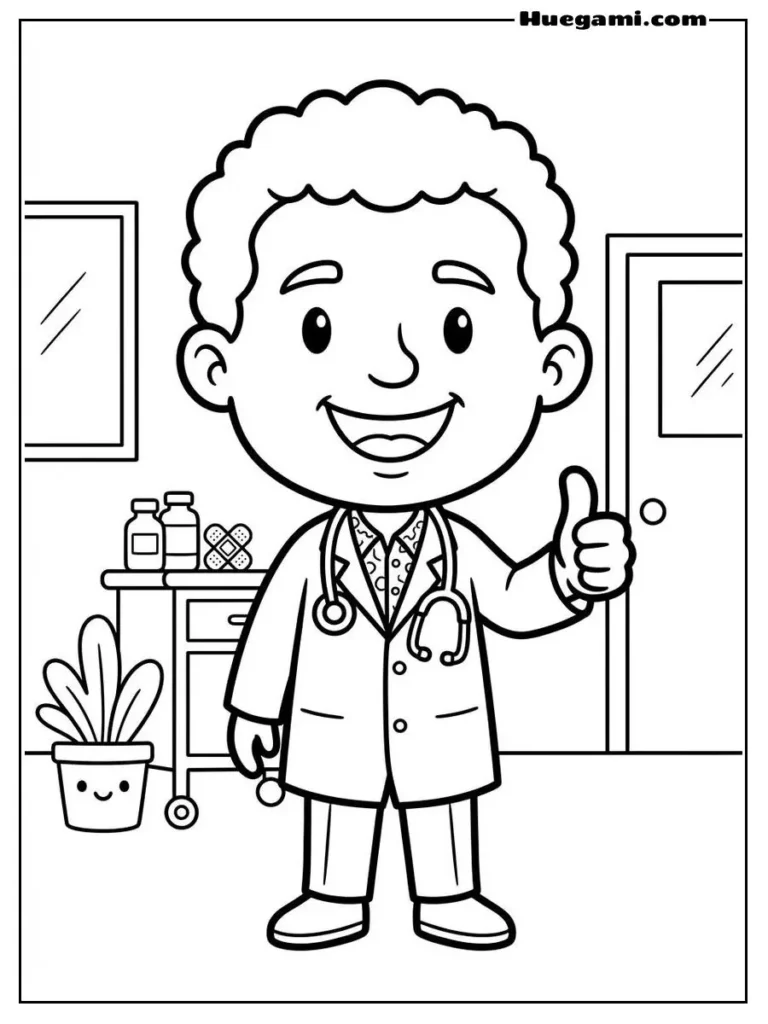
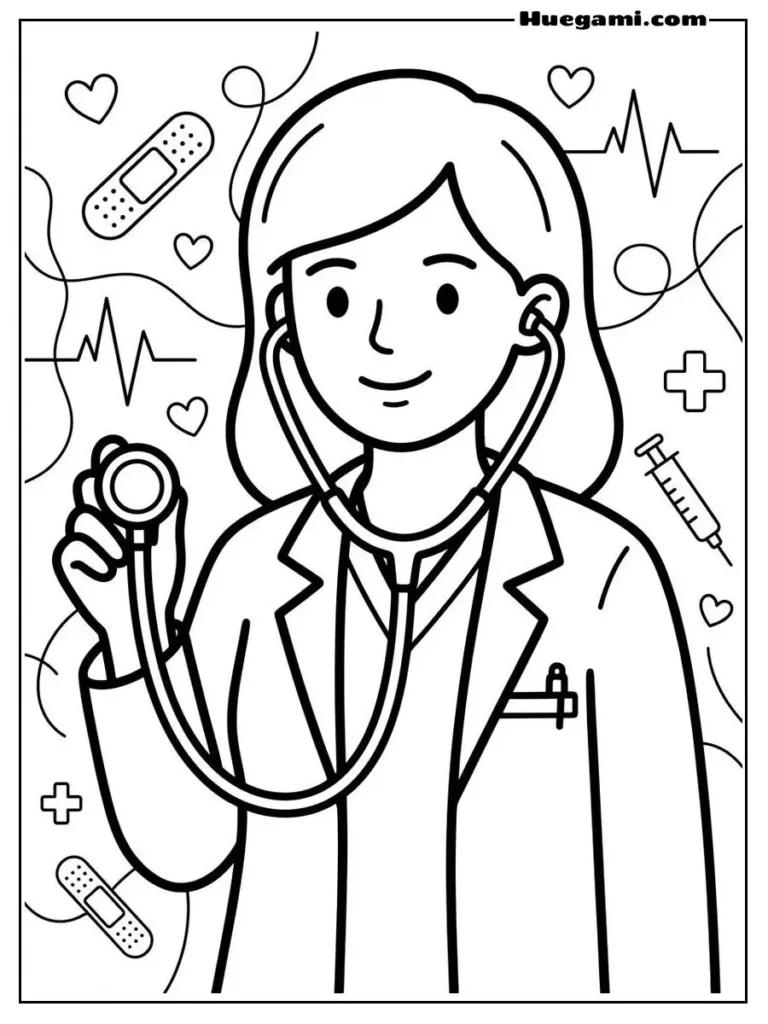
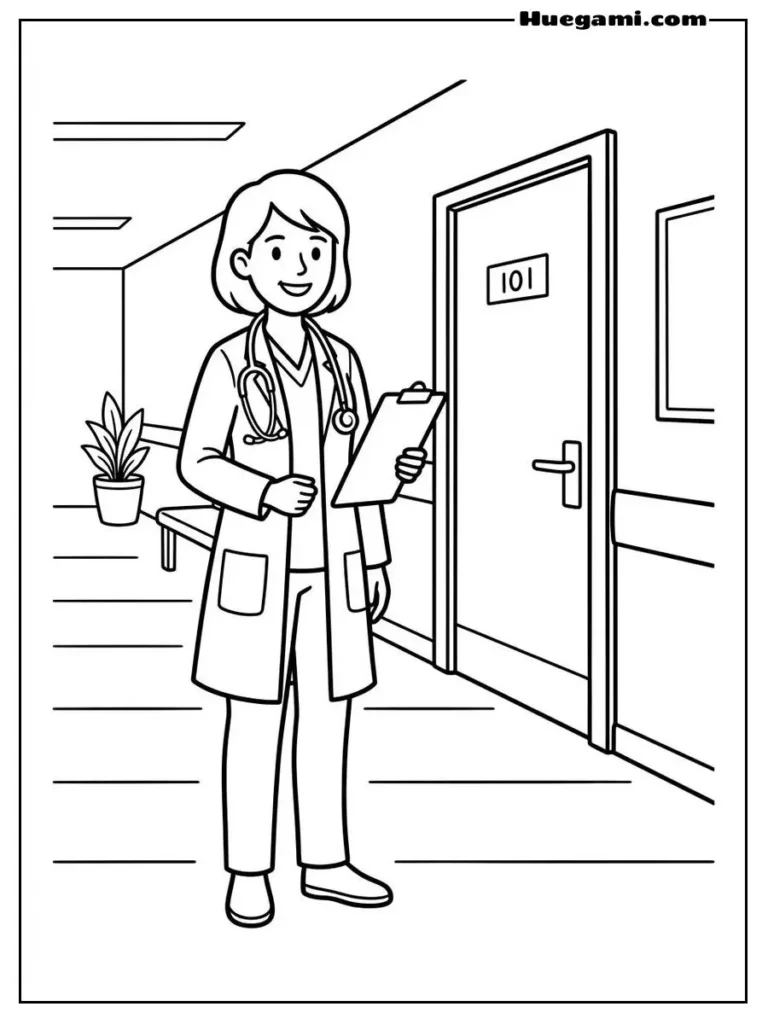
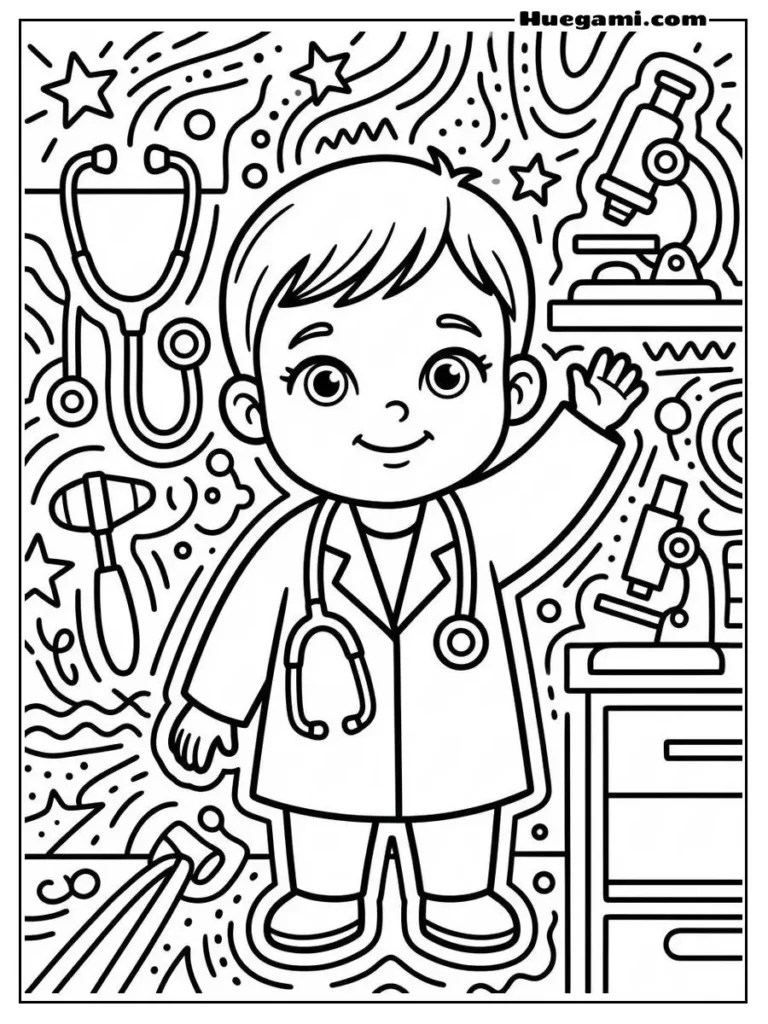
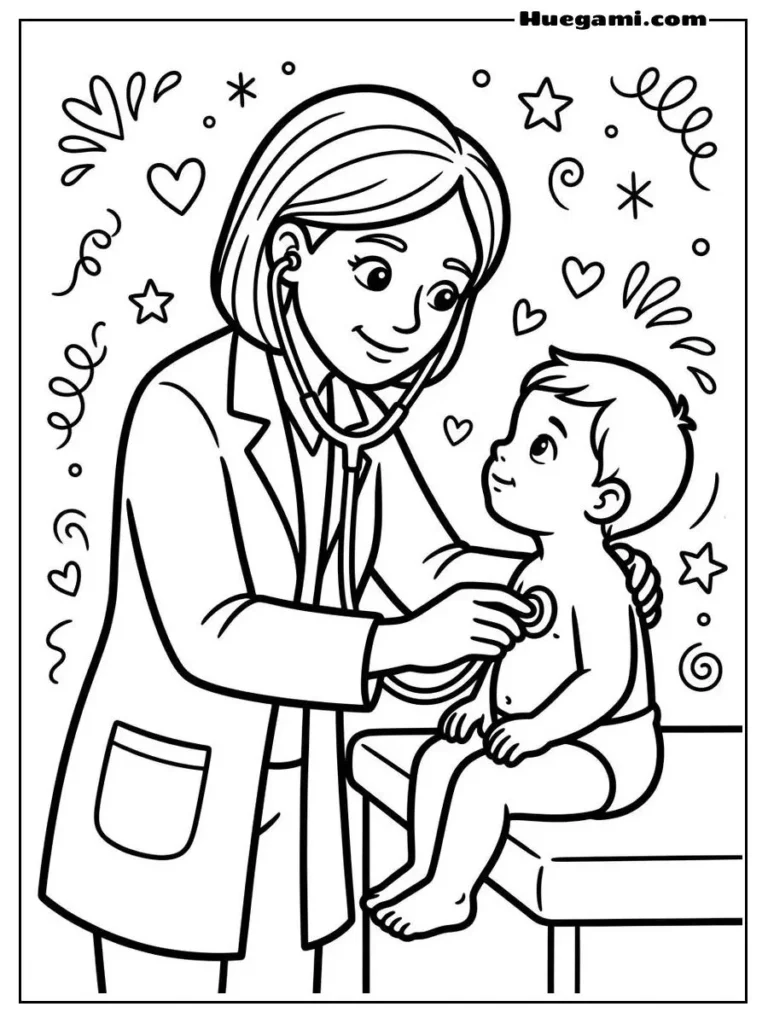
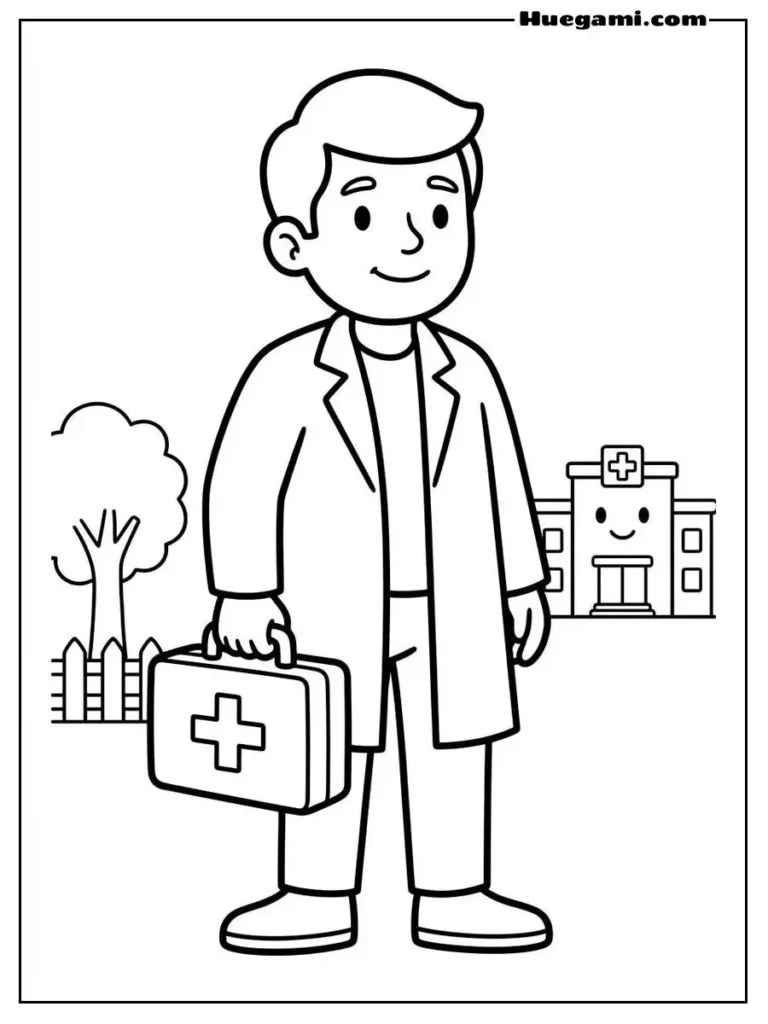
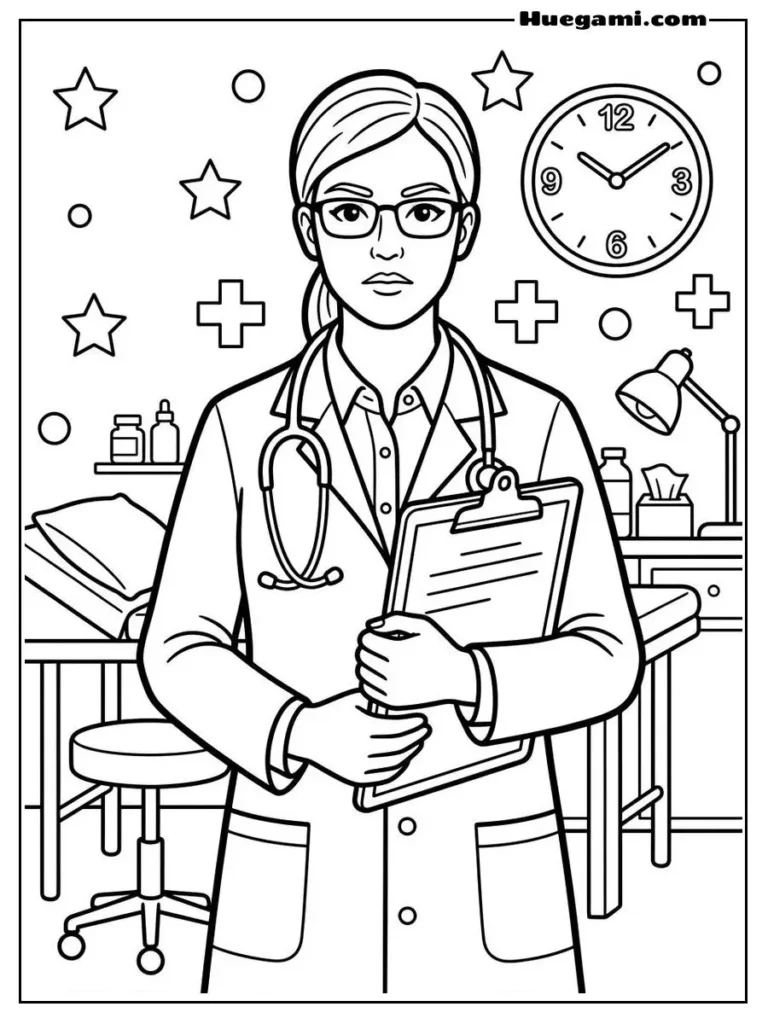
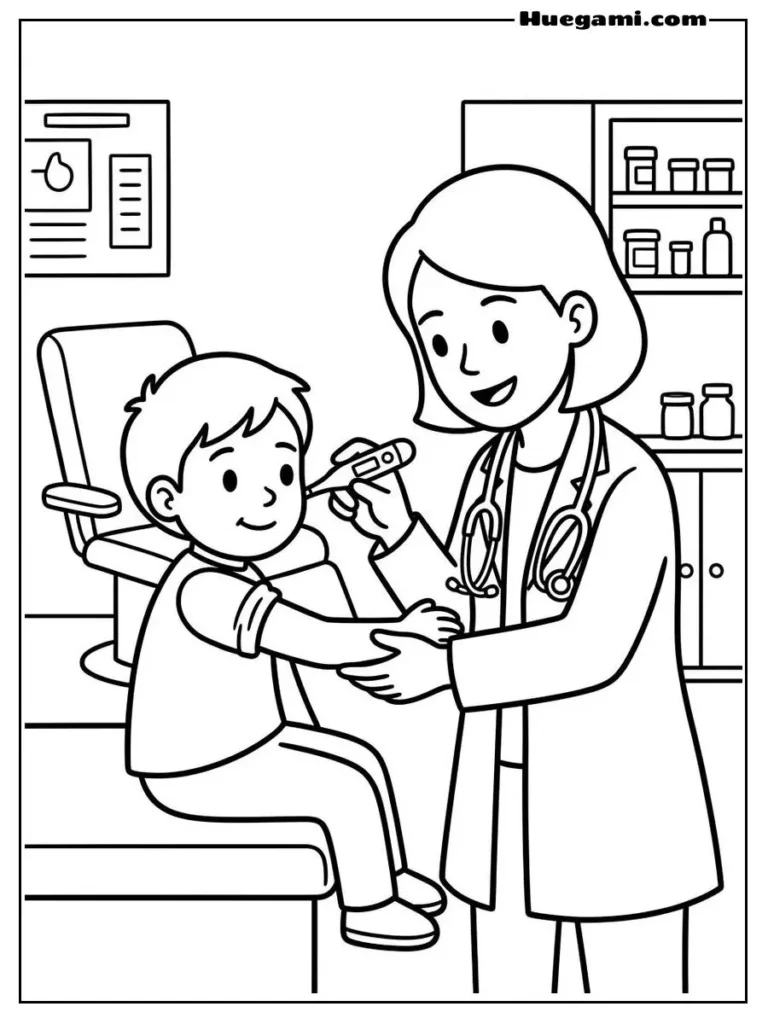
Our doctor collection includes a mix of friendly scenes so kids can pick the page that matches their mood. Some are simple and bold for little hands, and others have extra details for kids who like to take their time. Here is what you can look forward to:
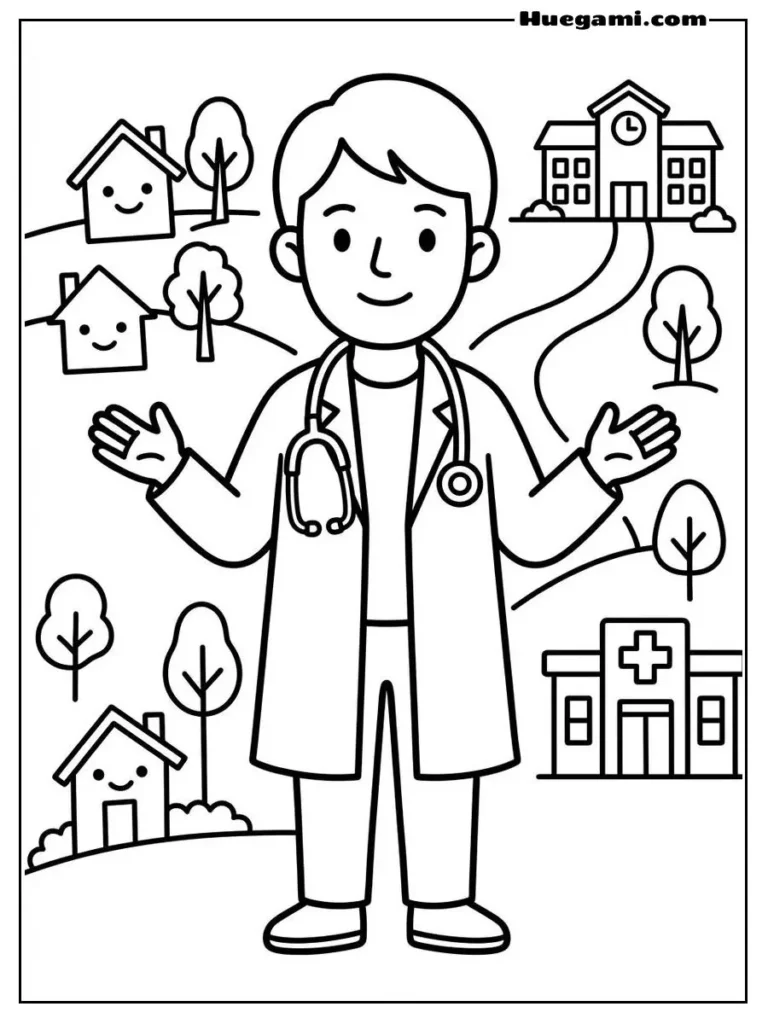
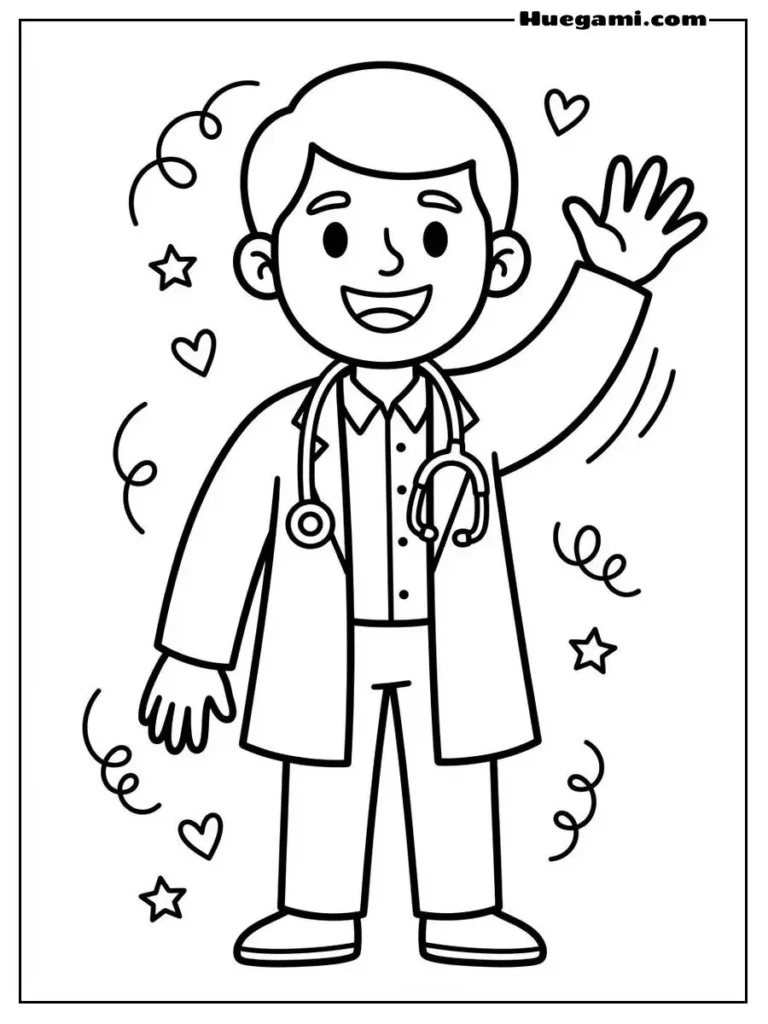
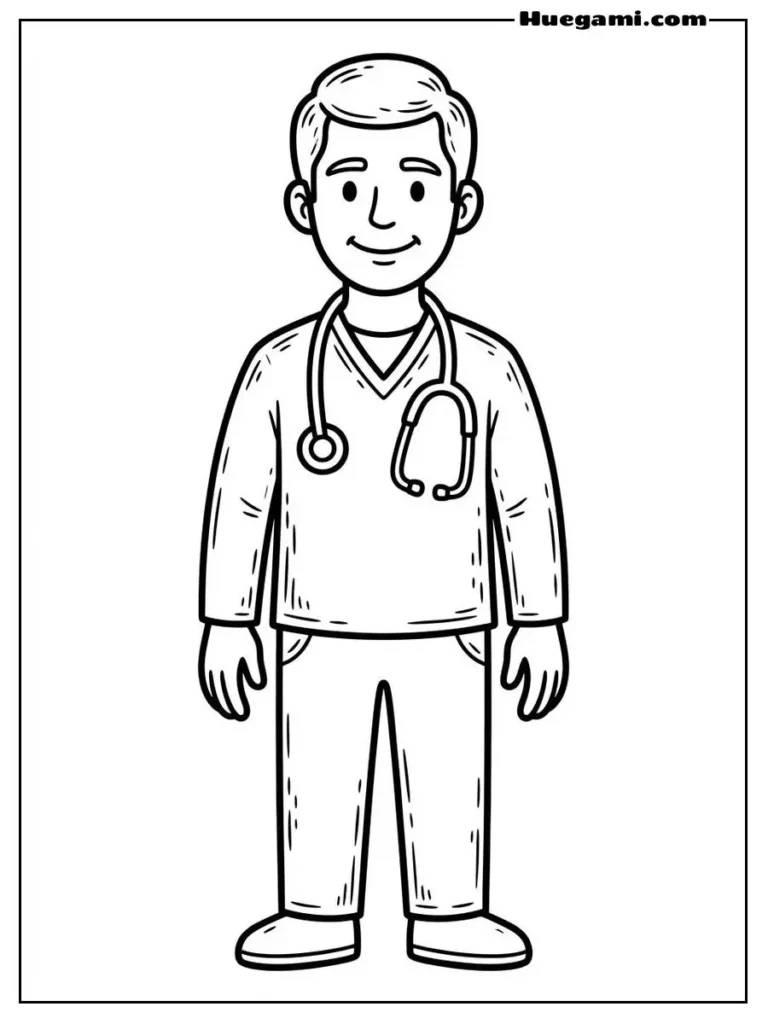
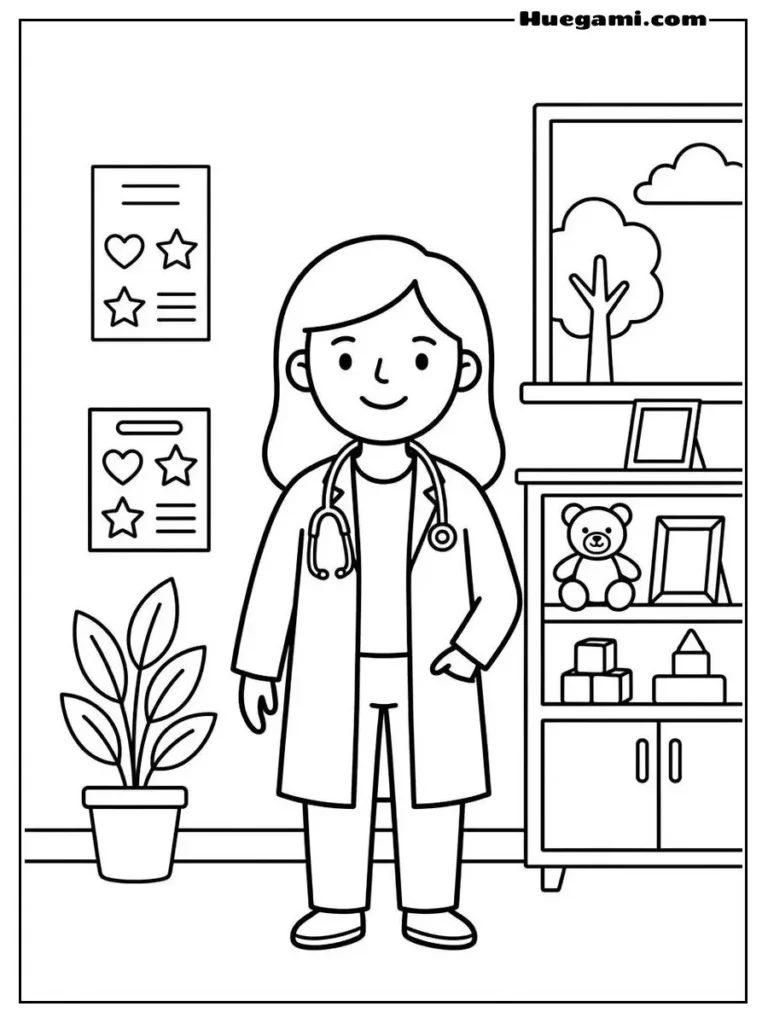
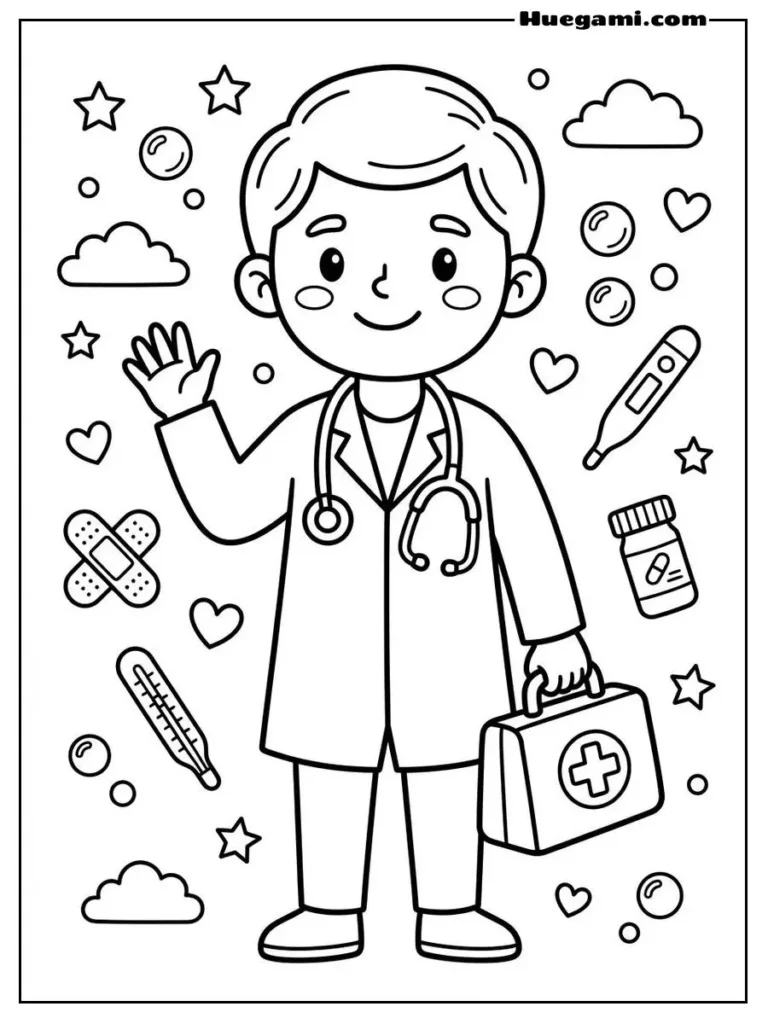
- A smiling doctor in a white coat with a stethoscope around the neck, ready to greet a patient
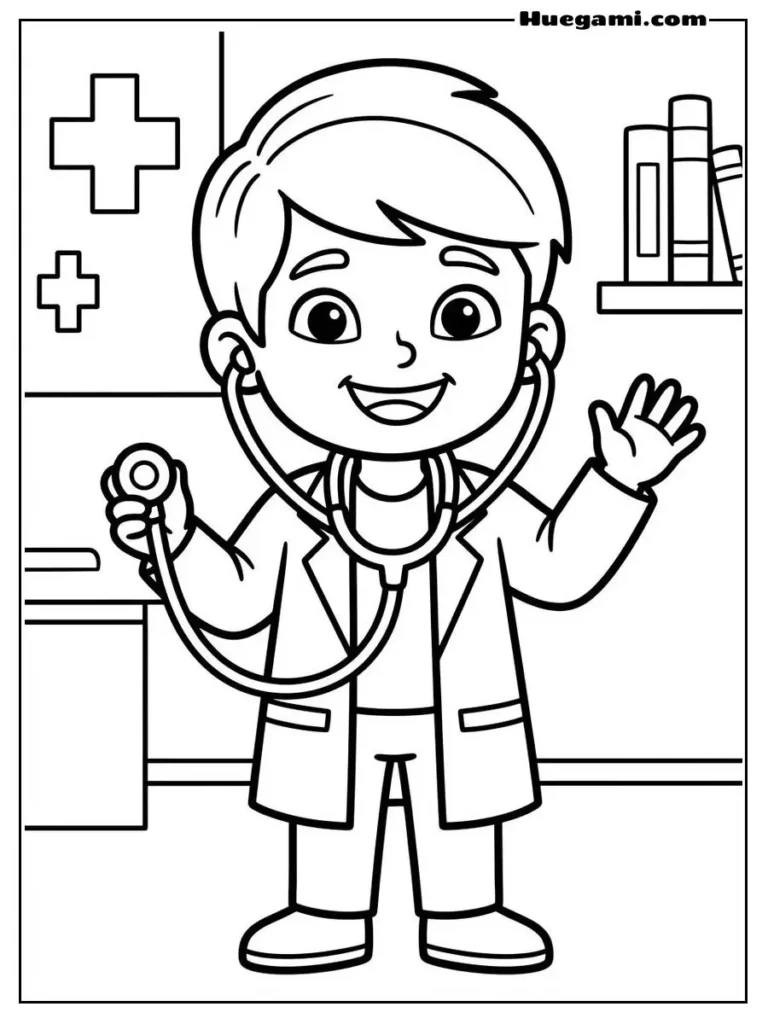
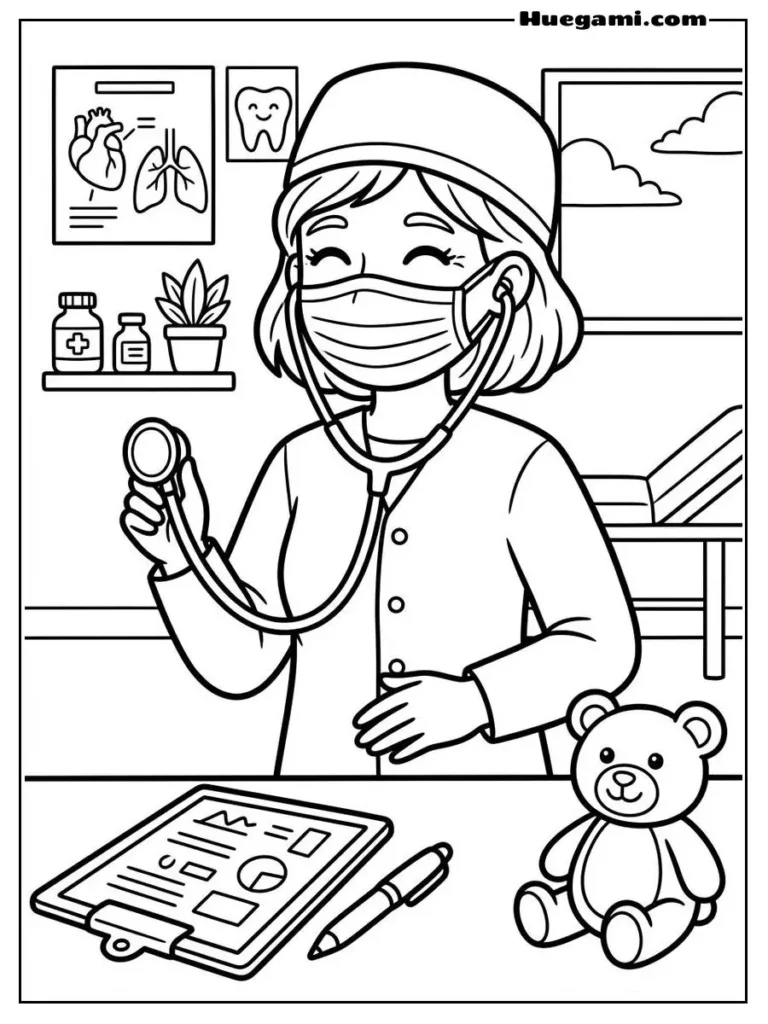
- A check-up scene with a doctor listening to a child’s heartbeat
- A close-up page of doctor’s tools, including a thermometer, otoscope, reflex hammer, and bandages
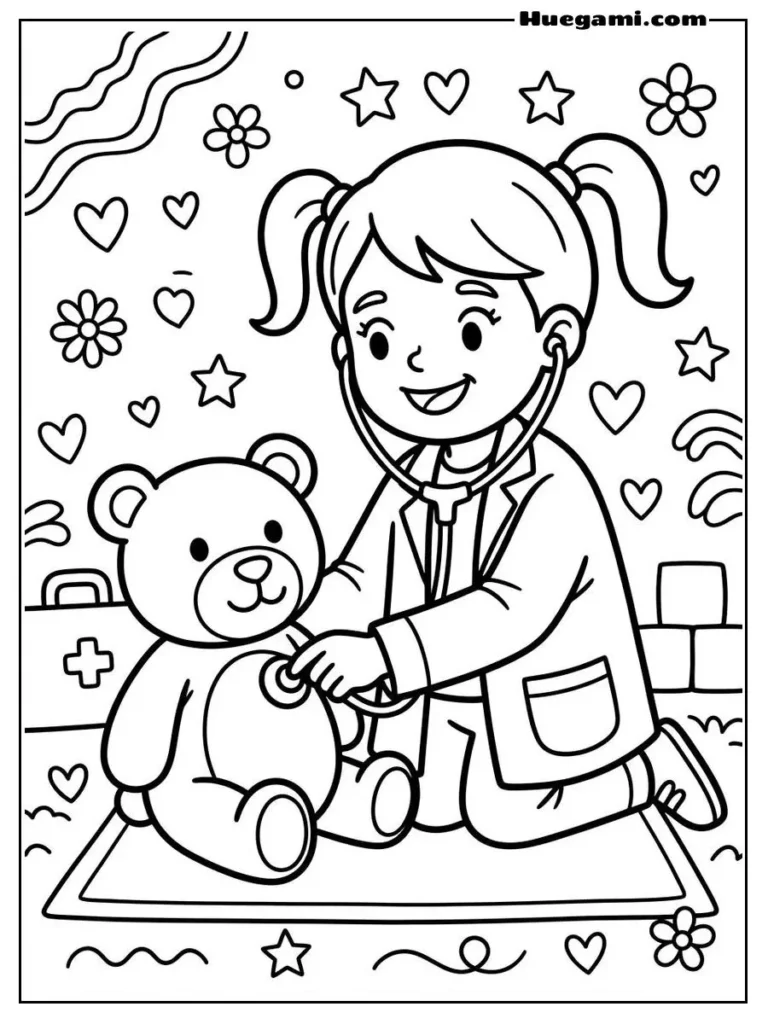
- A teddy bear patient with a bandaged arm and a caring doctor beside it
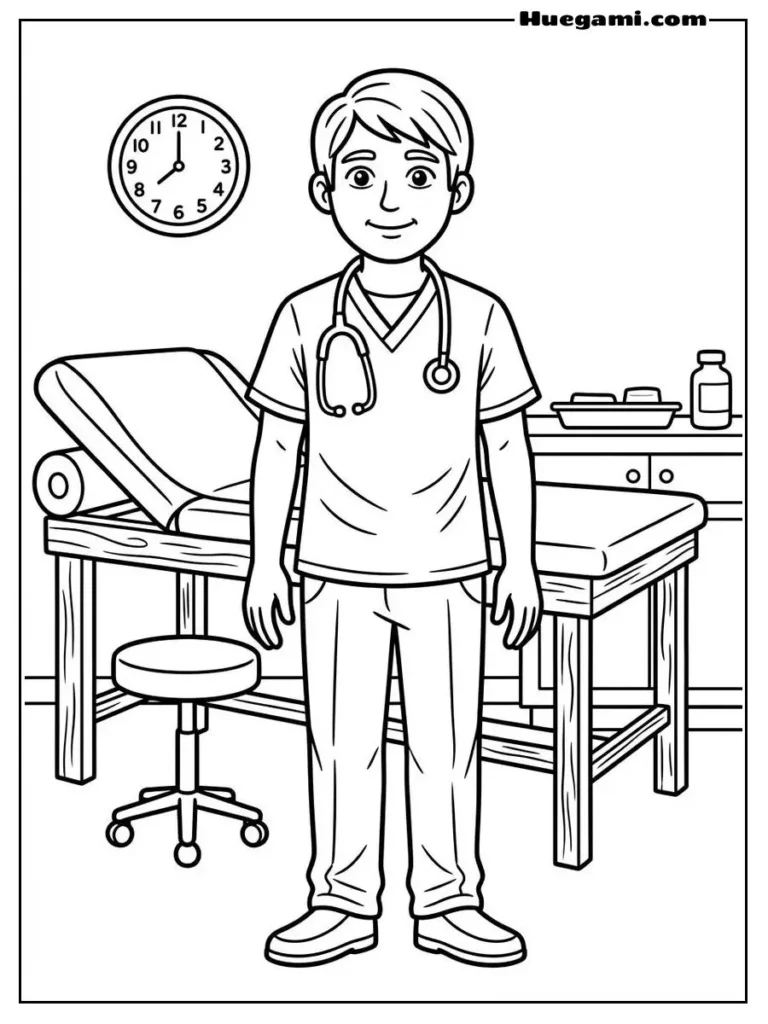
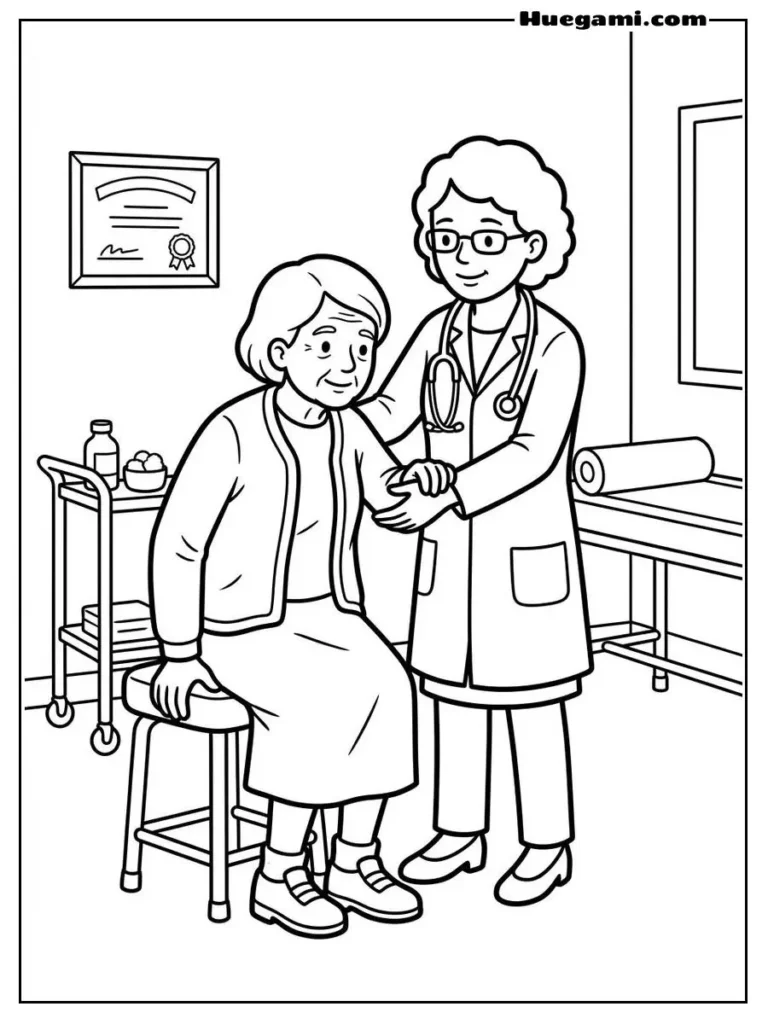
- A waiting-room or clinic scene with posters, chairs, and toys to explore
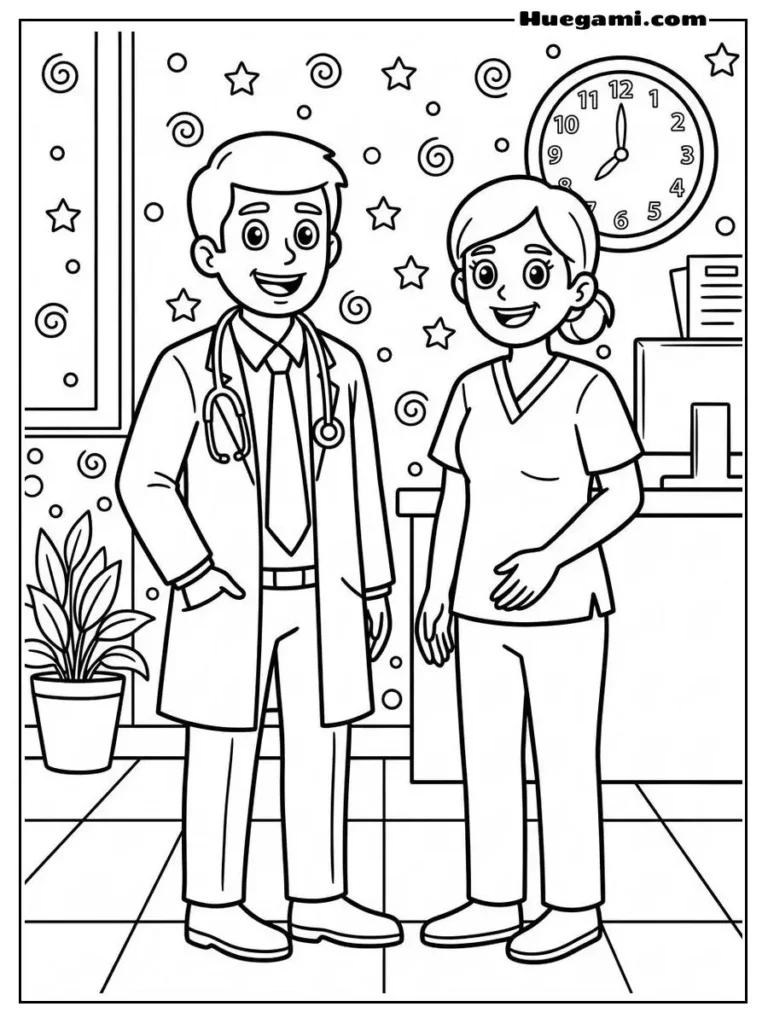
- A team page showing a doctor working alongside a nurse and other helpers
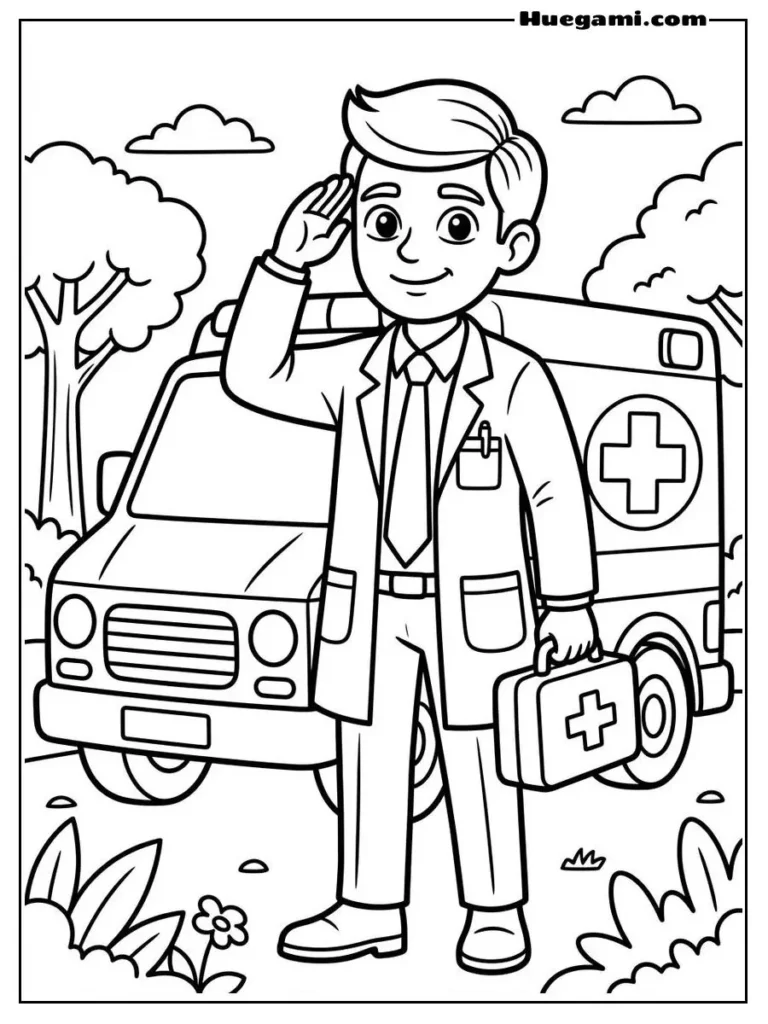
- A simple ambulance or health-van page for kids who love vehicles
Have a look at the full set and choose the ones that spark your child’s imagination. If your family enjoys them, keep exploring, since there are plenty of other printable jobs coloring pages waiting to be colored.
What Kids Can Learn From Doctor Coloring Pages
Coloring the small parts of a doctor’s outfit and tools builds fine motor control, since kids have to steer a crayon around a stethoscope tube or a tiny bandage. Beyond that, these pages open a door to real vocabulary. Words like thermometer, patient, clinic, and check-up become familiar, and kids start connecting them with actual experiences. Children also begin to see that doctors are helpers who care about people, which builds empathy and a sense of trust.
The pages also invite science-style curiosity. Kids wonder what a heartbeat is, why bodies get warm when they are sick, and why washing hands matters. You can answer a few of those questions together, or look up one at the library and come back to the page. The sheets work at home, in waiting rooms, and in classrooms, but the real treasure is the conversation they start about health, kindness, and careers.
How to Use and Print Your Sheets
Getting started takes just a few minutes, and these quick tips will help.
- Pick a page, download it, and print it on regular letter-size paper; thicker paper is nice if your child likes to press hard.
- Crayons and chunky markers suit younger kids, while colored pencils are great for older kids who want to color the tiny details.
- Print two copies of a favorite scene so siblings or friends can each make their own version.
- Hang finished pages on the fridge, or turn them into a “thank you, helpers” wall for your home or classroom.
Fun Ideas and Activities
Once the coloring is done, the fun can keep going. Doctors make great inspiration for pretend play, crafts, and simple learning games. Try these ideas, and feel free to adapt them to your family or classroom.
- Teddy bear clinic: Set up a pretend doctor’s office with stuffed animals as patients. Let your child give each one a check-up with a paper stethoscope and a toy thermometer.
- Paper-tube stethoscope: Roll a sheet of paper into a tube and listen for each other’s heartbeats after jumping jacks, then again after resting, just like the story of the first stethoscope.
- Doctor’s kit craft: Decorate a small box as a doctor’s bag and fill it with paper tools your child draws, cuts out, and names.
- Healthy habits chart: Make a simple weekly chart for washing hands, drinking water, and getting good sleep, with a sticker for each day completed.
- Helper thank-you cards: Have kids write and color a card for their own doctor, nurse, or school nurse to say thank you.
- Doctor affirmations: Together, say kind sentences a doctor might say, such as “I listen carefully” and “I help people feel better,” and decide which ones your child would like to try too.
Frequently Asked Questions
How can coloring help a child who feels nervous about going to the doctor?
Coloring a friendly doctor scene before an appointment lets your child see the visit as something familiar and calm. Talk about what will happen while they color, and let them pick cheerful colors for the doctor’s coat and tools. Many kids feel braver when they already know what to expect.
What is the difference between a doctor and a nurse?
Doctors and nurses both care for patients, but their training and daily tasks are different. Doctors usually figure out what is wrong and decide on a plan, while nurses often carry out that care, check on patients, and offer comfort. They work as a team, which makes a great topic to talk about with kids.
Why do some doctors wear white coats and others wear colorful scrubs?
Some say the white coat became popular because white looks clean and professional. Today, what a doctor wears often depends on where they work and what they do that day. Kids can pick any colors they like when they color their own doctor.
What other jobs can my child color after finishing the doctor pages?
There is a whole world of helpers to explore, from firefighters and teachers to farmers and builders. Browse the professions collection on Huegami to find more career coloring pages. Coloring several jobs in a row makes for a fun “what do you want to be?” conversation.
Can I use these pages to start a conversation about staying healthy?
Absolutely. While your child colors, you can chat about simple habits like washing hands, eating fruits and vegetables, and getting enough rest. Keep the tone light, and let them ask questions in their own words.
Conclusion
Doctors are some of the most recognizable helpers in any community, and there is a lot to discover about them. From the story of the first paper-tube stethoscope to the tools tucked in a doctor’s bag, this topic has plenty for curious kids to explore. Our doctor coloring sheets make it easy to turn that curiosity into something hands-on, friendly, and fun.
Whether your child dreams of being a doctor, feels nervous about check-ups, or simply loves a good story, these pages give them a warm way to explore the job. Add a teddy bear clinic, a homemade stethoscope, or a thank-you card, and one page can become an afternoon of learning together. Kids often carry that kind of gentle curiosity right into their next real visit.
Ready to get started? Download and print your favorite pages today, grab your crayons, and let the check-ups begin. When you are done, explore more Learning & Affirmations Coloring Pages on Huegami for more ways to learn while you color.